How Much Nitrogen Gas Should I Add for Increased Shelf Life of Food?
Nitrogen is one of the most popular gases for modified atmosphere packaging. By displacing the oxygen within your food packaging, nitrogen is able to dramatically increase the shelf life of your food products—meaning less waste and happier customers.
How Nitrogen Extends Shelf Life
Modified atmosphere packaging is an important part of food preservation because it eliminates the oxygen and replaces it with nitrogen. As you know, bacteria, such as mold and mildew, rely on oxygen to grow. When you remove the oxygen, your food will last longer on the shelf. Nitrogen for food preservation is also relevant because it fills up every pocket of space within your packaging, so there is nowhere for moisture to get in. A modified atmosphere packaging machine allows you to easily replace the oxygen with nitrogen right onsite, greatly reducing the amount of waste your company has and saving your company thousands of dollars per year.
Determining How Much Nitrogen for Food Preservation
When it comes to determining how much nitrogen for food preservation, there is not a one-size-fits-all answer. There are many factors that go into play with modified atmosphere packaging, but in general, these are the five characteristics you need to consider:
- The Natural Shelf Life – Foods that go bad quickly will obviously require more nitrogen for food preservation than shelf-stable foods like honey or dried beans.
- The Type of Gas Mixture – Nitrogen is not the only gas used in modified atmosphere packaging. In fact, UNIDO has compiled some recommended gas mixtures for different types of foods. Those with the highest moisture contents, such as fresh pasta or pastries, will usually use 99-99.9% nitrogen, while others use a mix of nitrogen and carbon dioxide.
- The Type of Packaging – How heavy duty is the material you are using? Is it porous and prone to punctures, or solid and dense? If there is a chance of any gas escaping, you need to keep that in mind when determining how much nitrogen you need when using a modified atmosphere packaging machine.
- The Storage Conditions – Is your product going to be stored on an open shelf, or will it be kept refrigerated or frozen? Foods stored at room temperature generally need more nitrogen.
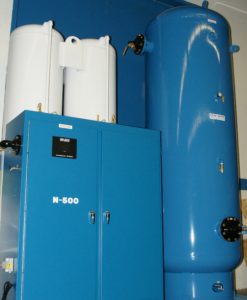
Essentially, the amount of nitrogen that you will require for modified atmosphere packaging is extremely variable. Oftentimes, a trial and error process is necessary to figure out what will give your food an optimal shelf life. With an onsite nitrogen generator from On Site Gas Systems, you can have the nitrogen you need, when you need it, making modified atmosphere packaging easier than ever. To learn more about nitrogen for food preservation, contact us now.
 A
A  Now is the right time to consider an industrial N2 filling station for your company. On Site Gas Systems offers
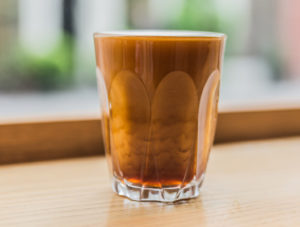
  When you think about it, nitro cold brews were inevitable. Amid the current passion over craft beers — and in a world full of creative brew-masters — it makes sense to apply similar principles to another popular beverage staple. Cold brewed, stored in a keg and infused with nitrogen (hence the “nitro”), the coffee connoisseur website
  Oxidation, bacteria, and spoilage are a winemaker’s worst enemies, threatening profits and sales. Nitrogen can be used to help prevent oxidation, which occurs when wine is exposed to too much oxygen. And the use of nitrogen throughout various stages of the winemaking process helps preserve color, flavor, and aroma of any wine.
 If you currently use nitrogen cylinders in your bar or coffee shop, you know the